If you’ve lived through a Wisconsin winter with an old exterior door, you know the frustration it can cause. Cold drafts seep through the gaps, driving up your energy bills. In summer humidity, the door swells, only to crack when temperatures plunge again. You’re constantly maintaining it just to keep it functional.
Choosing a durable exterior door for Wisconsin weather is about selecting a material engineered to withstand freeze-thaw cycles, moisture and temperature extremes without constant maintenance. According to the National Association of REALTORS®, a new steel entry door recovers 100% of its cost at resale, and a fiberglass door recovers 80%. Your investment pays off in comfort, energy savings and home value.
What Are the Best Materials for Exterior Doors?
When you’re searching for the best exterior doors for cold climates, three materials dominate the market — fiberglass and composite, steel and wood. Each performs differently under harsh weather conditions, and understanding their strengths and weaknesses helps you make a decision that protects your home. While all three materials are available in the market, not all perform equally in climates with Wisconsin’s freeze-thaw cycles and humidity extremes.
Fiberglass and Composite
Fiberglass and composite materials represent the most durable exterior doors for cold and humid climates because they’re engineered to eliminate the natural weaknesses of traditional materials. These advanced materials deliver performance advantages that make them ideal for this challenging climate:
- Moisture resistance: Unlike wood, composite doors don’t absorb water, and unlike steel, they won’t rust, keeping your entryway protected year-round.
- Dimensional stability: These doors resist expansion and contraction through Wisconsin’s extreme temperature fluctuations, maintaining their shape and seal without warping or cracking.
- Superior insulation: Most quality models feature insulated cores that help reduce heat loss during winter and support lower energy costs.
- Low maintenance appeal: You can get the look of wood grain without the hassle of refinishing every few years.
Steel
Steel doors are a popular choice for homeowners who want security and energy efficiency without a premium price tag. When filled with polyurethane foam insulation, steel doors can offer strong thermal performance, though they may still conduct heat and cold more readily than fiberglass or composite options. They’re also highly resistant to forced entry, making them one of the strongest all-weather exterior doors for protection.
However, steel has limitations in this area’s climate. Road salt, moisture and harsh weather conditions can cause rust if the door’s finish is scratched or chipped. Steel is also prone to denting from impact, and once the protective coating is compromised, corrosion accelerates. Regular inspection and touch-up painting are necessary to extend the life of a steel door.
Wood
Wood doors offer timeless beauty and craftsmanship that many homeowners find appealing. Solid wood provides some natural insulation, though it generally insulates less effectively than foam-core steel, fiberglass, or composite doors. The aesthetic value comes at a cost in durability and maintenance.
Wisconsin weather characteristics for exterior doors include freeze-thaw cycles, high humidity in summer and extreme cold in winter. Wood responds poorly to all three. It absorbs moisture, which causes swelling, warping and eventual rot. Temperature changes cause the material to expand and contract, leading to cracks and gaps that compromise the door’s seal. To prevent deterioration, wood doors require sanding, sealing and repainting every few years. For homeowners seeking low-maintenance, weatherproof entry doors, wood is the least practical option.
How to Compare Door Materials
Selecting the most durable exterior doors for cold Wisconsin winters requires evaluating performance across four key factors. Each one directly impacts how well the door protects your home and how much ongoing work it demands:
- Insulation and energy efficiency: Look for doors with low U-factor ratings and high R-value ratings. Insulated fiberglass and steel doors generally offer stronger thermal performance than solid wood doors, especially when paired with quality weatherstripping and professional installation. For added confidence, choose a door with the ENERGY STAR® label for northern zones to ensure your choice meets strict government efficiency guidelines.
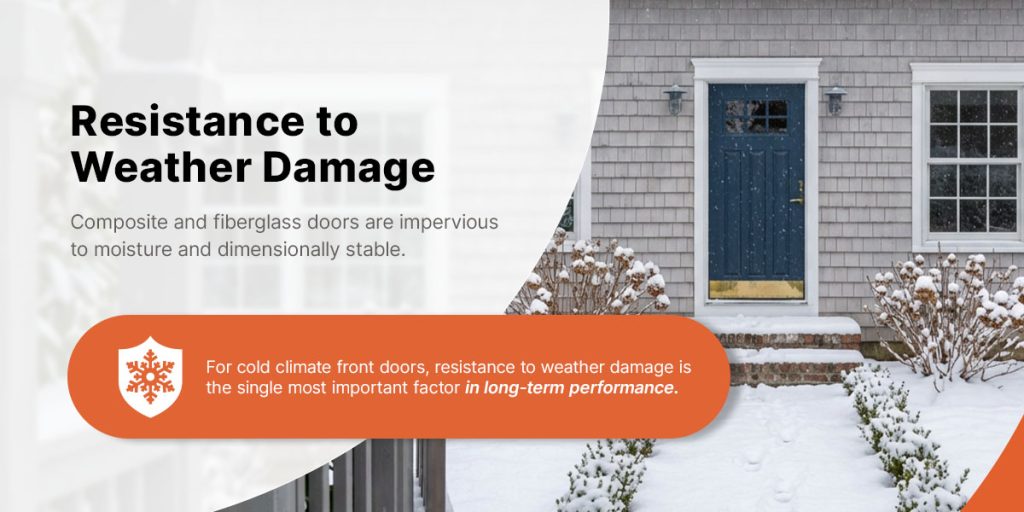
- Resistance to weather damage: Wisconsin’s freeze-thaw cycles put constant stress on exterior doors. Water seeps into small cracks, freezes, expands and forces the material apart. Wood is particularly vulnerable to moisture absorption, which leads to warping, swelling and rot over time. Steel is susceptible to rust once its finish is scratched, especially when exposed to road salt. Composite and fiberglass doors are impervious to moisture and dimensionally stable, meaning they don’t expand or contract with temperature changes. For cold climate front doors, resistance to weather damage is the single most important factor in long-term performance.
- Long-term maintenance requirements: Maintenance demands vary dramatically by material. Wood doors require sanding, sealing, and repainting every two to three years to prevent moisture damage and maintain appearance. Steel doors need periodic inspection and touch-up painting to address scratches before rust develops. Fiberglass and composite doors require minimal maintenance — an occasional cleaning with soap and water is typically all that’s needed. For homeowners who want the best door material for snow, ice, and temperature extremes without constant upkeep, composite is the clear choice.
- Security and strength: Steel doors offer inherent strength and resistance to forced entry, making them a reliable option for protection. Modern composite doors are engineered with reinforced cores and locking systems that provide comparable security while maintaining superior weather resistance. Steel and composite doors can be fitted with multipoint locking systems, reinforced frames and impact-resistant glass for added safety.
Fiberglass vs. Steel vs. Wood for a Wisconsin Climate
To help simplify your choice, this chart breaks down how each material typically performs across critical factors. Actual performance can vary by product construction, glass options, installation quality and maintenance.
| Factor | Fiberglass/Composite | Steel | Wood |
|---|---|---|---|
| Insulation (R-Value) | High | High | Moderate |
| Weather Resistance | High — impervious to moisture | Medium — rust risk if scratched | Low — warps, rots, cracks |
| Maintenance | Low — occasional cleaning | Medium — touch-up painting needed | High — refinish every 2-3 years |
| Durability | High — dimensionally stable | Medium — dents and rust | Low — moisture damage |
| Security | High — reinforced cores | High — inherent strength | Medium — can weaken over time |
Lasting Performance With Renewal by Andersen® Doors
Once you understand which materials perform best, the next step is to find a partner who offers premium products and professional installation. Choosing Renewal by Andersen® entry doors and Andersen® storm doors means selecting products designed to deliver decades of reliable performance.
The Science Behind Fibrex® Door Material
Renewal by Andersen® doors are built with Fibrex® material, a game-changer for Wisconsin weather. This unique composite gives you the best of both worlds, offering the strength of wood and the seamless care of vinyl. It’s incredibly tough, built to stand up to brutal winters without warping, cracking or rotting. You’ll also love how well it insulates, keeping your home cozy and your energy bills down. Plus, because it doesn’t soak up moisture, your door will look great and open smoothly for years, with hardly any effort from you.
Cold Weather Exterior Door FAQs
Here are answers to some of the questions we hear most from homeowners choosing a door that can hold up to a real Wisconsin winter.
What types of exterior doors are best for cold climates?
The best exterior doors for cold weather in states like WI are fiberglass. You’ll find they don’t warp, rust or rot, and they hold heat better than wood or bare steel. Renewal by Andersen® Ensemble® entry doors are built for cold-climate performance with a foam-filled core and weathertight seals designed to stand up to a Wisconsin winter.
Are fiberglass doors better than steel doors for insulation?
Fiberglass does outperform steel for insulation, and here’s why it matters for your home. Fiberglass doesn’t conduct heat the way metal does, so less warmth escapes through your door on a cold day. The Renewal by Andersen® Ensemble® entry door takes it even further with a dual-composite frame made of Fibrex® material and fiberglass, staying stable through freeze-thaw cycles without losing its seal.
What is a good R-value for an exterior door in a cold climate?
A good R-value for your exterior door in a cold climate is at least five, and what’s inside the door is what gets you there. That’s where polyurethane foam insulation does the heavy lifting. Ensemble® entry doors from Renewal by Andersen® feature a foam-filled core that ranks among the most effective insulating options, making them a strong choice for Wisconsin winters.
Do wood doors hold up in cold, wet winters?
Wood doors don’t hold up well in cold, wet winters. The material absorbs moisture, and this leads to swelling, warping and drafts in your home over time. You’re better served by a door material that stays stable no matter what the weather brings, and won’t shift or lose its seal from one season to the next.
Time for a Door That Performs
You don’t need to choose between materials. We’ve already done that research. Asher has served homeowners with professional door installations for 52 years as a second-generation, family-owned company. We’ve seen what works in this climate and what fails.
That’s why we exclusively offer Renewal by Andersen® entry doors and patio doors — made from Fibrex® composite — and Andersen® storm doors to add an extra layer of protection and energy efficiency to your entry, fully customized to your home and installed by factory-trained technicians. Our technicians complete factory training through Renewal by Andersen®, so every installation meets the manufacturer’s standards for performance and longevity.
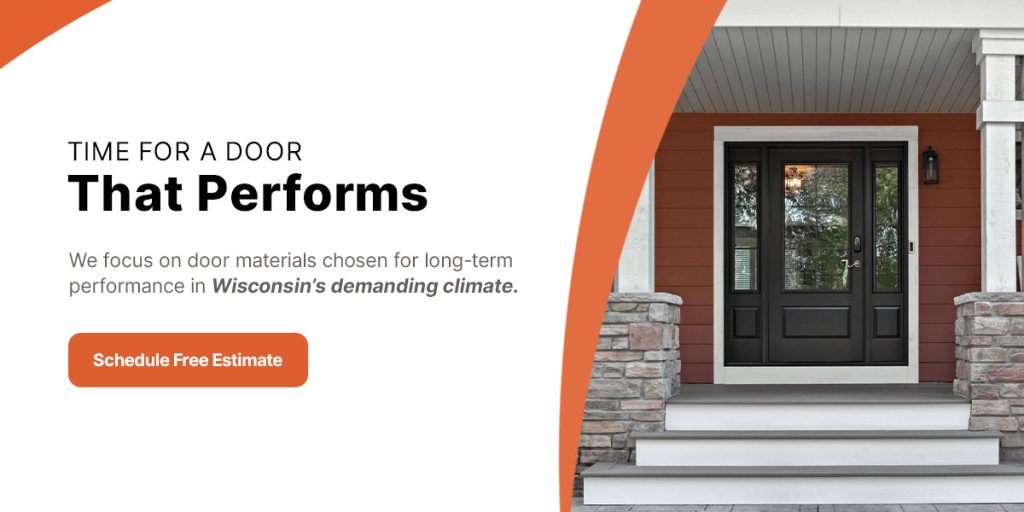
At Asher, we focus on door materials chosen for long-term performance in Wisconsin’s demanding climate. Fibrex® material combines wood fiber and polymer to offer the strength and beauty homeowners want with the low-maintenance performance they need. It resists common weather-related issues like rot, warping and cracking, helping your door look great and operate smoothly through changing seasons. Schedule your free estimate today and get a complimentary 60-90 minute consultation, or call 715-832-7282 to find the right door solution.