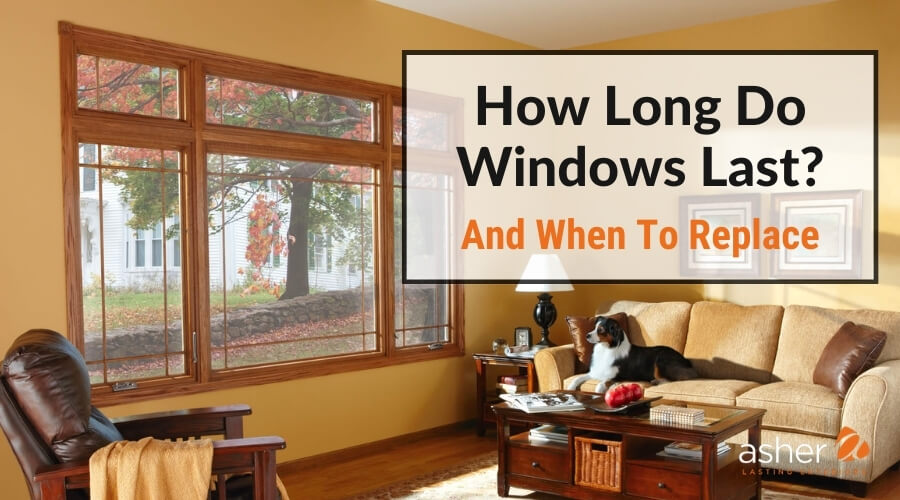
Windows are a significant investment in your home, as they affect its energy efficiency, natural light quality and aesthetic appeal. Many windows can last decades, but that depends on the material and how well they’re maintained. Understanding your windows’ lifespan helps you plan for their maintenance, repairs and eventual replacement.
This guide will help you determine if you need new windows and how long they should last.
- How Long Should Windows Last?
- 6 Signs Your Windows Need Replacement
- Factors Affecting Window Longevity
- Frequently Asked Questions
Asher provides quality and lasting windows while helping you reduce the cost of replacement.
Average Lifespan by Window Type
The lifespan of windows generally depends on the material they are made of and the climate you live in. For example:
-
- Vinyl: These windows can last anywhere from 20-40 years. They are durable and low-maintenance, which makes them an excellent choice for long-term value. However, living in an extremely hot or cold climate can cause the windows to warp, meaning they will need to be replaced more frequently.
- Wood: Wood windows can last at least 20 years with proper care. While they provide classic aesthetics and natural insulation, they require regular painting or staining to protect against moisture damage and rot.
- Aluminum: Aluminum windows require less upkeep than vinyl and wood. Many aluminum windows last around 20 to 30 years, depending on coating quality, climate and maintenance. They’re lightweight and strong but may develop condensation issues. They also offer less insulation compared to vinyl or fiberglass options.
- Fibrex®: Asher offers Fibrex® windows made with Fibrex® composite material, a blend of wood fiber and thermoplastic polymer. This means it is extremely durable and long-lasting against damage, weather and other issues. These windows typically last 40-50 years. Renewal by Andersen® has tested Fibrex® material after decades of exposure, and with proper installation and care, these windows are designed for long-term performance.
6 Signs Your Windows Need Replacement
The following signs can help solidify your window replacement decision and save on potential damage and repairs.
Drafts and Air Leakage
Drafts are often a clear sign that windows need to be replaced. Drafty windows let in cold or warm air, causing your home’s HVAC system to work overtime to compensate. Older windows lose their seal over time, leading to this air leakage. If you notice your windows leak air even when closed, it may be time to replace them.
Difficulty in Operation
If your windows are difficult to open or close, this can be a sign to replace them. Jammed windows or windows that don’t stay open can cause many issues for your home, including:
- Exposure to the elements.
- Added allergies from pollen getting inside your home.
- Decreased energy efficiency.
Condensation Between Glass Panes
Condensation on the outside of your window is normal. However, if it happens on the inside or between the panes, this can point to other issues. Condensation between the panes usually means that the window seals are fading, which can reduce insulation effectiveness and lead to mold growth.
Noticeable Damage or Decay
Noticeable damage or decay, such as cracks, rot and warping, is one of the clearest signs to replace your windows. You need to fix this issue as soon as possible before other problems arise. For example, a cracked window makes it easier for burglars, bugs, rodents or water to get inside.
Increased Noise Penetration
Noise pollution and external sounds can start seeping into your home if your windows are old or have deteriorated. Windows are supposed to help block noise, but old or single-paned windows cannot do this well. Investing in newer, double- or triple-paned windows can help combat this issue.
High Energy Bills
If the seal on your windows has broken down, leading to increased drafts and other weather issues, you may notice your electric bill rising quickly. Installing modern windows can increase energy efficiency and lower your electrical costs.
Replacing your windows can help your home stay green and energy-efficient for decades to come.
Factors Affecting Window Longevity
Many factors can affect the lifespan of your windows, such as:
Material Quality
The material of your windows can affect how long they last. Asher’s Renewal by Andersen® Fibrex® windows provide some of the best quality for long-lasting efficacy, whereas wood or vinyl might require earlier replacement.
Climate
Harsh weather, extreme temperatures and high humidity accelerate wear on windows. Wisconsin winters, for example, place extra demands on window seals and frames, which makes quality materials even more important.
Asher’s Renewal by Andersen® windows provide durability that withstands the elements.
Installation
Proper installation is essential for your windows’ performance. Even premium windows can fail early if they’re not installed correctly. A professional installation helps with more accurate sealing, alignment and long-term durability.
Asher’s commitment to high installation quality means you won’t have to worry about improper installation issues.
Maintenance
Regularly maintaining and caring for your windows is important for their longevity. Some tips to ensure that your windows are cared for include:
- Regularly cleaning your windows.
- Checking the seal and caulking around the windows every few months.
- Ensuring the window’s tracks enable seamless opening and closing.
- Replacing weather stripping.
- Cleaning the glass.
- Looking out for moisture, mold or condensation.
Frequently Asked Questions
For further questions about window repairs and replacements, please refer to the following FAQs.
How do I know if I should replace my windows or just repair them?
The window repair versus replacement decision depends on the severity of the damage, the age of your windows and whether a repair will solve the problem long-term. If you’re experiencing minor issues like broken hardware, small cracks or worn weather stripping, repairs are often enough. However, if your windows show frame rot, seal failure between panes or persistent drafts after repairs, replacing them would be better.
Consider these factors when choosing whether to repair or replace windows:
- Window age: If your windows are over 20 years old and approaching the end of their expected lifespan, replacing them may offer better long-term value than ongoing repairs.
- Frame integrity: Rotted or structurally compromised frames are challenging to fully repair, as they may continue to cause problems.
- Glass seal failure: Condensation between panes indicates a broken seal, meaning the glass unit or entire window should be replaced.
- Energy efficiency impact: Old windows lose insulation over time, which may force your HVAC system to work harder and inherently drive up energy costs. New windows help reduce this strain and potentially lower your monthly bills.
- Window repair vs. replacement cost: While repairs may seem less expensive up front, repeated fixes can add up. If you face multiple issues or structural damage, replacement can help prevent future expenses.
Repairs make sense when the issue is isolated and fixable. Replacements make sense when the window’s core structure or energy performance has failed.
How much does window repair typically cost compared to replacement?
The cost of a window repair can vary widely, depending on the type and severity of damage. Simple fixes like hardware replacement or re-caulking tend to be more affordable, while more complex repairs can add up quickly. Window replacement usually involves a higher up-front investment, but the exact cost depends on factors like material choice, window size and energy efficiency features.
While replacement requires more initial investment, it reduces the need for ongoing repairs and can help lower heating and cooling costs over time. If you’re facing multiple repair needs or your windows are nearing the end of their expected lifespan, replacement often provides better long-term value.
What window problems can be fixed without replacing the whole unit?
Window problems that can be fixed without replacing the whole unit include:
- Broken locks or latches.
- Worn weather stripping.
- Minor cracks in a single pane of glass.
- Stuck or difficult-to-operate sashes.
- Loose or damaged trim.
These issues are typically repairable and don’t require a full window replacement. However, problems like condensation between double-pane glass, severe frame rot or warping, persistent drafts after weather stripping replacement and structural frame damage usually require replacement.
If you’re unsure whether your window can be repaired, a professional assessment can help you make the right decision.

Get Expert Guidance on Your Windows
Whether you’re deciding if it’s time for a full window replacement or need guidance on your options, Asher provides honest recommendations tailored to your home’s needs. We specialize in Renewal by Andersen® replacement windows — fully customized, energy-efficient and built to last for decades. Our team serves homeowners throughout Wisconsin with the expertise and care you deserve.
Get in touch with our team or call us at 715-832-7282 to discuss your windows and find the right solution for your home.
