Choosing the right frame material is a critical decision in a window replacement project. It impacts everything from your monthly energy bills to your property’s curb appeal. This article guides you through the most common types of window materials, helping you make the best choice for your home.
How to Choose the Best Material for Replacement Windows
A window is a long-term investment, and the best material for your neighbor might not be the most ideal for you. When considering the materials used in windows, evaluate each one against these key factors:
- Budget: Your budget will guide your options. Look at how the up front price compares to the lifespan, maintenance costs and potential energy savings the material offers.
- Climate: The material should be suitable for your local weather conditions. The best material will hold up against moisture and temperature fluctuations without warping, cracking or rotting.
- Maintenance: Consider how much time you want to spend on upkeep. Fibrex® windows are very low maintenance, while wood windows require regular painting or staining.
- Energy efficiency: Look for the Energy Star label and check the U-factor and Solar Heat Gain Coefficient (SHGC) ratings, which indicate how well the window insulates and blocks heat gain.
- Aesthetics: Does the material provide the look you want, and is it available in the colors or finishes that complement your home? Select a style that aligns with your home’s architectural style.
What Are the Materials Used in Windows?
The following are the popular types of window materials used today:
Vinyl Windows
Vinyl windows, constructed from polyvinyl chloride (PVC), are one of the most popular and budget-friendly options currently on the market.
The advantages of these windows include:
- Affordability: Vinyl typically has a low initial purchase and installation cost compared to other materials. It makes a great choice for homeowners on a tight budget.
- Low maintenance: Vinyl frames do not require painting, staining or sealing. They are easy to clean and resist moisture, meaning they won’t rot or attract pests.
- Moisture resistance: Unlike wood, vinyl is impervious to water damage, making it an ideal option for high-humidity climates or areas prone to heavy rainfall.
The following are their disadvantages:
- Potential for degradation: In extreme temperatures, vinyl can become brittle in the cold or soften and potentially warp in the heat, which can compromise the window’s seal and structural integrity over time.
- Limited color options: Although improvements have been made, vinyl is typically offered in a limited color palette, and painting is strongly discouraged as it can void the warranty. The material is also prone to fading over decades.
- Less premium appearance: While functional, the thick, bulkier frame profiles often associated with vinyl can obstruct views and are generally not considered as aesthetically pleasing or as premium as wood or composite options.
Wood Windows
Wood is the classic, high-end choice for many traditional homes. The natural beauty and timeless warmth of a wood window frame material are unparalleled.
Their advantages include:
- Premium aesthetic: Wood offers a classic, natural beauty that is difficult to replicate.
- High customization: Wood can be painted or stained in any color, allowing homeowners maximum flexibility to match their current decor or change the look later.
- Top-tier insulation: As a natural insulator, wood is inherently one of the most energy-efficient frame materials available, significantly helping to reduce heat transfer.
Disadvantages of wood windows include:
- High cost: Wood windows are generally the most expensive option on the market, both for the initial material purchase and the specialized installation required.
- Susceptibility to damage: Wood is an organic material, making it highly susceptible to rot, decay and insect and pest infestations, especially in moist environments.
- Intensive maintenance: To prevent damage, wood needs regular, intensive maintenance, which includes scraping, sanding, priming, painting or sealing every few years.
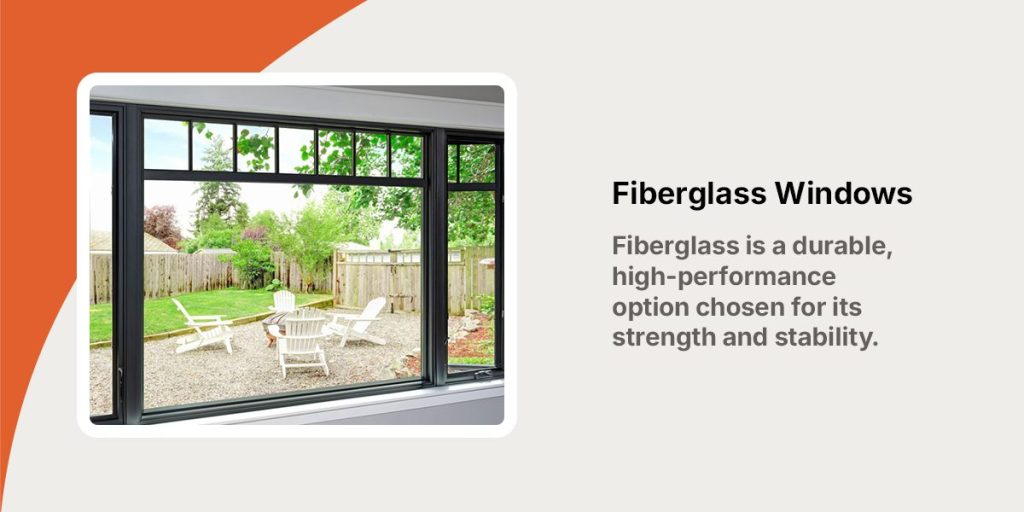
Fiberglass Windows
Fiberglass is a durable, high-performance option chosen for its strength and stability. The benefits of this material include:
- Minimal expansion and contraction: Fiberglass expands and contracts at a rate very similar to glass, minimizing the stress on the window’s seals and glass panes, thereby preserving the energy efficiency over time.
- High energy efficiency: Its composition provides superior insulating properties, often rivaling or exceeding wood in thermal performance. It can also be painted to match your home.
- Extreme durability: Made from glass fibers and resin, fiberglass is exceptionally strong. It won’t warp, rot, corrode or crack, offering excellent longevity and structural integrity.
The drawbacks of this material include:
- Higher initial cost: While typically less expensive than high-end wood, fiberglass costs more up front than standard vinyl windows.
- Fewer design options: Although the market is expanding, fiberglass is still not as widely available in as many styles and customization options as wood or even some vinyl lines.
Aluminum Windows
Aluminum windows are often seen in modern architecture or commercial buildings. They are valued for their structural strength and ability to create very thin, minimalist frames that maximize views and natural light.
The following are their advantages:
- Durability: The material is highly durable, resistant to rust and corrosion, and requires very little maintenance once installed.
- Narrow frame profiles: Their strength allows for sleek, narrow frames, which provide a contemporary aesthetic and maximize the amount of visible glass area.
Their disadvantages include:
- Poor insulation: As a metal, aluminum is an excellent conductor of heat and cold. Without a thermal break, which is an insulating strip separating the inside and outside frame, it will rapidly transfer outdoor temperatures into your home. This can result in poor energy efficiency and condensation issues.
- Higher efficiency cost: Aluminum windows must incorporate expensive thermal breaks to achieve acceptable energy performance, which significantly increase the total purchase price.
Fibrex® Windows
Fibrex® is an exclusive material from Renewal by Andersen® that represents a new generation of window solutions. It is one of the best materials for replacement windows for these reasons:
- Real wood fiber core: Fibrex® is a proprietary composite made from a blend of real wood fiber (40%) and thermoplastic polymer (60%). This unique composition harnesses the strength and stability of wood without the vulnerability to rot or pests.
- Unmatched strength: The added wood fibers give Fibrex® exceptional structural stability. It is two times stronger than conventional vinyl, which allows Renewal by Andersen® to manufacture significantly narrower, more elegant frames. This maximized glass area means more natural light and a clearer view than bulkier vinyl frames.
- Low-maintenance longevity: Similar to vinyl, Fibrex® frames never require sanding, painting or scraping. Unlike wood, they will not rot, crack, pit or corrode. The color is integral to the material and provides a lasting finish.
- Superior insulating properties: Fibrex® provides excellent thermal performance, contributing to minimal heat transfer. This superior insulation translates directly into better home comfort and often significant savings on heating and cooling costs over the life of the window.
Get a Lasting Window Solution for Your Home
Homeowners in the market for a comprehensive, lasting window material solution now have a superior option. With Fibrex®, you no longer have to choose between the low maintenance of a synthetic material and the strength of wood.
Asher Lasting Exteriors is proud to be the trusted, certified installer of Renewal by Andersen® windows featuring the exclusive Fibrex® material in the Wisconsin area. We believe in providing solutions that look fantastic and will continue to perform reliably for decades.
Call us today at 715-832-7282 or fill out our contact form to discuss your needs, and we will provide an expert recommendation on the perfect, lasting window solution for you.